Established
28 Dec 1928
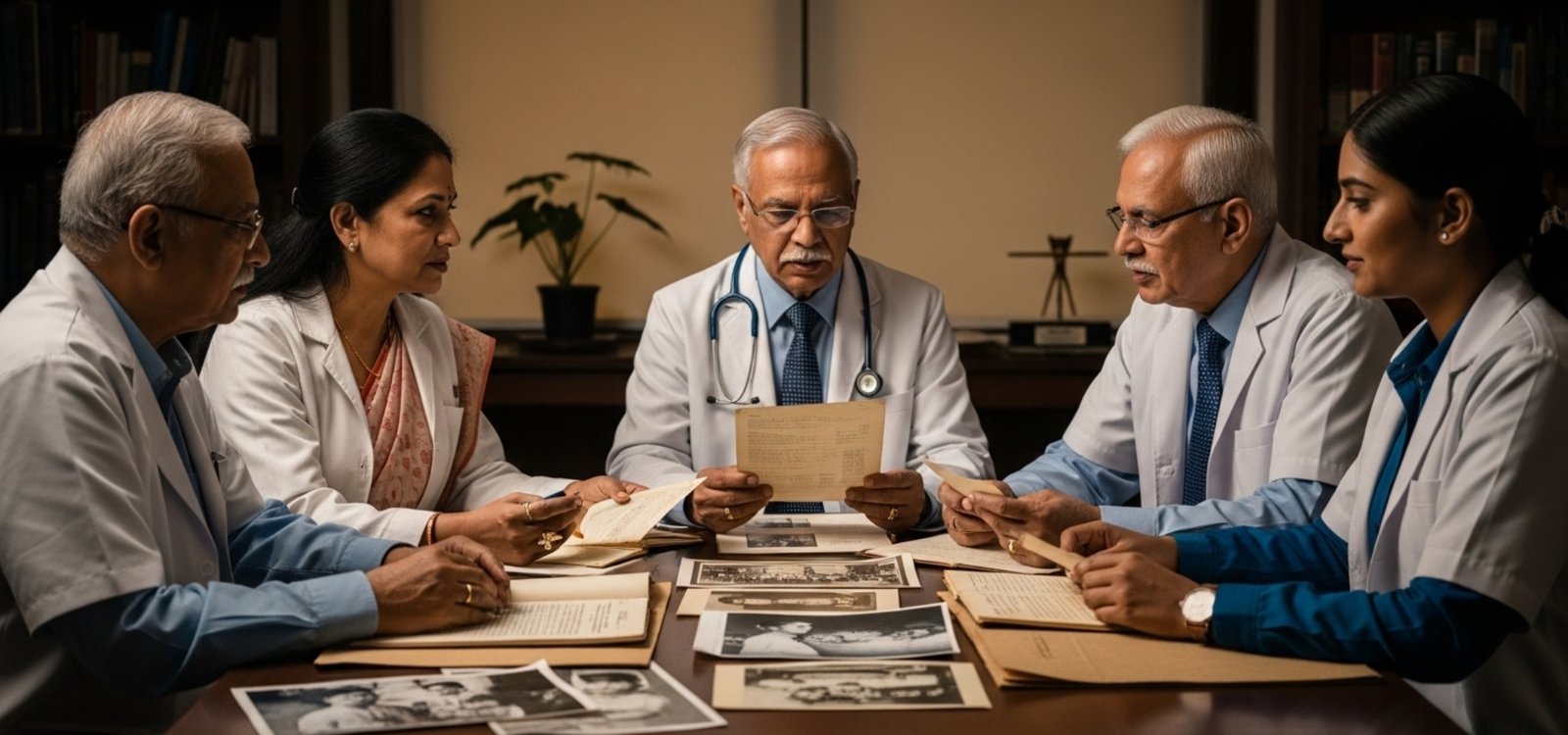
The representative voluntary organization of doctors of modern scientific medicine in India.
Indian Medical Association is the representative voluntary organization of doctors of the modern scientific system of medicine. It protects the interests of the profession while advancing public health and medical education for the nation.
Established
28 Dec 1928
State Branches
23
Union Territories
9
Local Branches
1274+
The general control, management and policy direction of the Association is vested in the Central Council, where local branches send representatives. The Council meets annually to frame policy, and delegates programme execution to the Working Committee, a representative body of State and Territorial branches.
The Working Committee meets at least three times a year for implementation of activities connected to member welfare and public health. At state level, similar structure prevails, while local branches function autonomously within the framework of the IMA Constitution.
National Headquarters
The National Headquarters of IMA is situated at New Delhi, while its Journal Office functions from Calcutta. For housing the headquarters, a six-storeyed IMA building was constructed at Indraprastha Marg, New Delhi. A separate IMA building for J.I.M.A. functions was also established at 53 Creek Row, Calcutta.
The President of IMA and three vice-presidents are elected by members of the Association. Other offices are chosen through the Electoral College of the Central Council. Similar representative processes operate across state and local branches.
For those who fulfil membership qualifications, prescribed forms may be submitted to the nearest branch with requisite fees. More information is available through the Honorary General Secretary, State Secretaries, and Local Branch Secretaries.
1917-1920
Four All India Medical Conferences were held at Calcutta (1917), Delhi (1918), a third conference in 1919, and Nagpur (1920), shaping the foundation for a unified medical body.
28 Dec 1928
At the 5th All India Medical Conference under Dr. G. V. Deshmukh, the resolution to form an All India Medical Association was adopted.
1930
The body was duly registered under the Societies Registration Act, XXI of 1860.
Jan 1949
After Independence, IMA Headquarters shifted from Calcutta to Delhi, while journal activities continued from Calcutta.
1958-1964
The foundation stone was laid by Dr. Rajendra Prasad on 19 Sep 1958, and the completed building was opened on 6 Sep 1964 by Dr. S. Radhakrishnan.
1985-1993
IMA withdrew from WMA in 1985 and rejoined after approval at the 45th General Assembly in Oct 1993.
Historical Narrative
Prior to the formation of IMA, four All India Medical Conferences had already taken place between 1917 and 1920. At the 5th conference held at Calcutta on 28 December 1928 under Dr. G. V. Deshmukh, a historic resolution created an all-India body for medical science advancement, public health improvement, medical education, and professional dignity.
The Association was formally registered in 1930. It grew during a politically turbulent era and drew support from stalwarts of the medical profession including Dr. K. S. Ray, Sir Nil Ratan Sircar, Dr. B. C. Roy, Dr. M. A. Ansari and many others, several of whom were active in India's freedom movement.
Though formed with only 222 members, IMA quickly established influence. It resisted key colonial administrative decisions, advocated an all-India medical register, and supported reforms to strengthen elected leadership in national medical governance.
After Independence, headquarters shifted to Delhi (January 1949). IMA House at Indraprastha Marg became a landmark institutional center, with foundation laid by Dr. Rajendra Prasad (1958) and inauguration by Dr. S. Radhakrishnan (1964).
IMA has played an important role in global and national platforms, including engagements with the World Medical Association and Commonwealth Medical Association. Its academic wings, IMA-CGP and IMA-AMS, have driven continuing medical education and specialist training.
Over the decades, IMA branches have supported major national health programmes and community services: family welfare, maternal-child health, universal immunization, oral rehydration, AIDS prevention, blood banks, ambulance services, and emergency relief during calamities.
Contact
The Honorary General Secretary, Indian Medical Association
I.M.A. House, Indraprastha Marg, New Delhi
or State Secretary in your State
or Local Branch Secretary in your Town